

Why I Review AI Safety Every Week
Technology changes quickly. New guidance, regulations, research and concerns surrounding artificial intelligence continue to emerge. I am not running a large AI corporation with a department of lawyers, researchers and safety specialists. Poodles & Friends is an independent project created with care by one mother and designer.
However, being small does not mean ignoring responsibility. That is why I now complete a documented AI Safety, Governance and Risk Review every week, with assistance from AI research tools. The final decisions and responsibility remain with me as the founder. The purpose is simple: to keep learning, notice important changes and consider whether anything within Poodle Talk or Poodles & Friends needs to be improved.
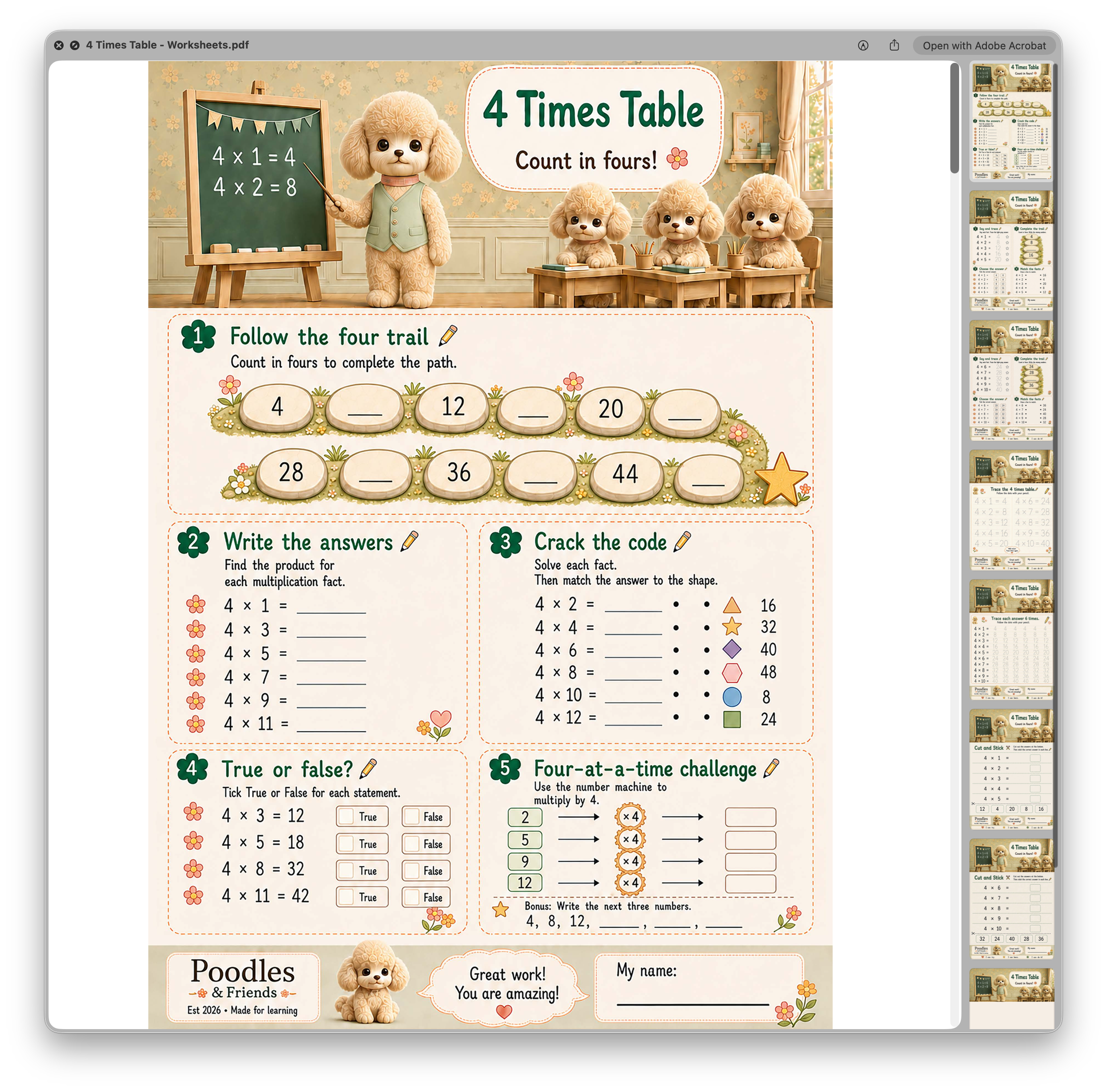
Times Table, Different Ways to Learn
Every child learns differently. Some children are ready to complete a full times-table challenge, while others benefit from tracing, visual support, shorter exercises or practical cut-and-stick activities.
That is why our Poodles & Friends Times Table Worksheet Packs include a variety of activity types and difficulty levels within one downloadable resource.

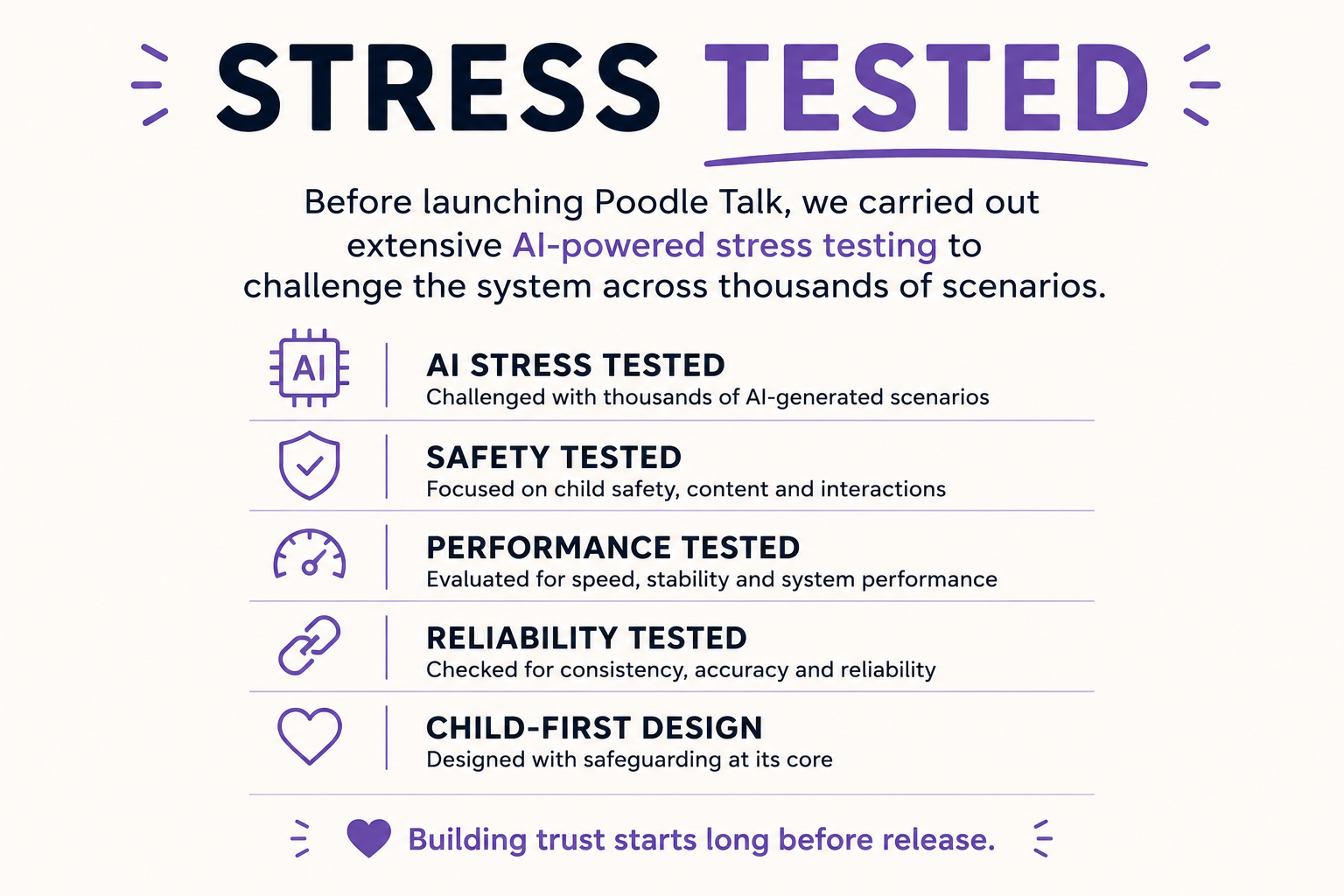
Why We Asked AI to Stress Test AI
What happens when things don't go as expected?
Poodle Talk was created for children and families. That means reliability, consistency and safeguarding matter just as much as creativity.
Before launching, I wanted to challenge the system from every angle.
Rather than relying on a handful of manual conversations, I asked AI to help stress test AI.
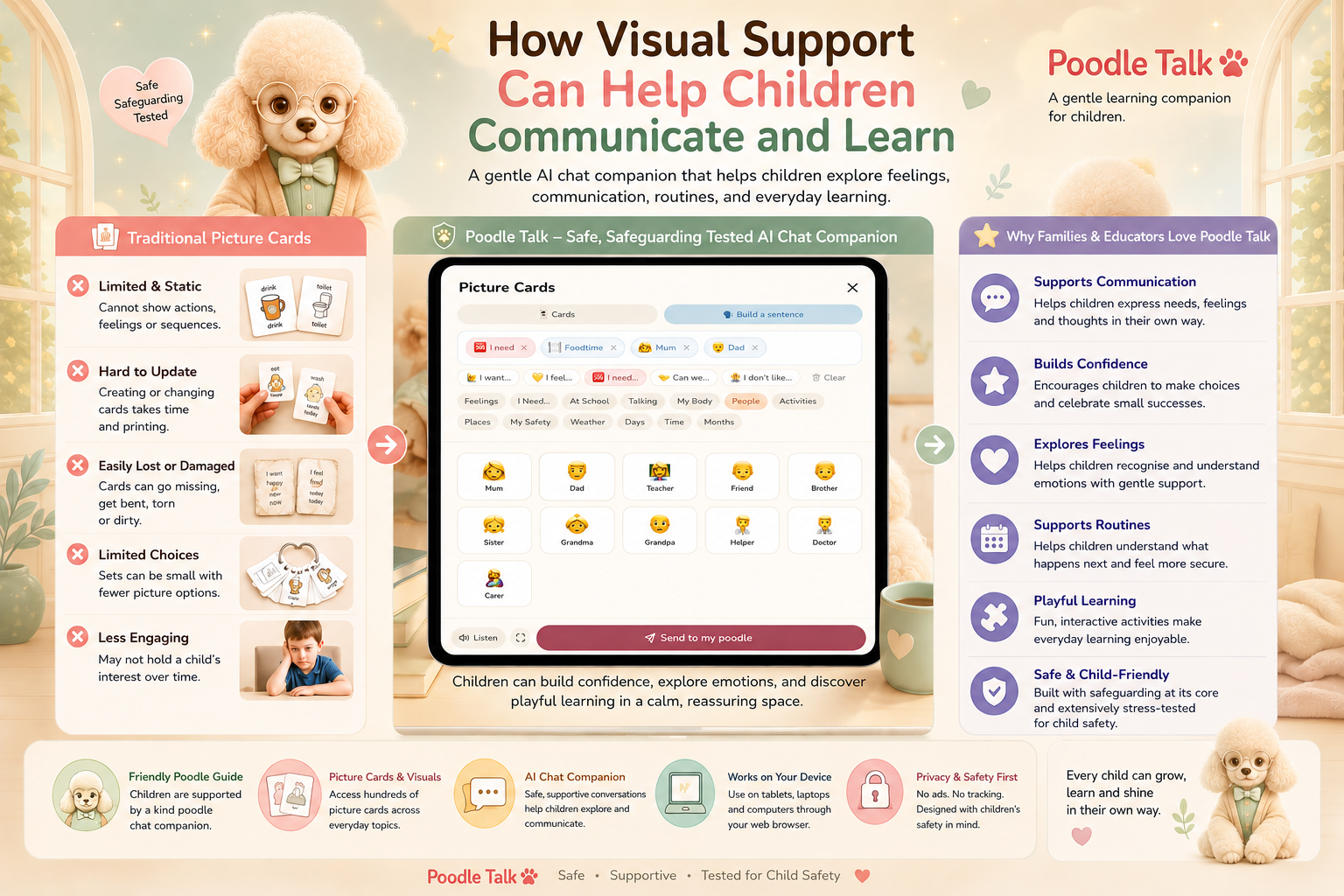
Why Schools Need More Than Traditional Picture Cards
Traditional picture cards still have an important place in education.
The goal is not to replace every visual support tool.
Instead, technology should provide additional options that help schools meet the diverse needs of children.
Every child communicates differently.
Some children may prefer physical cards.
Others may engage more effectively with interactive digital supports.
The most important thing is ensuring that every child has access to tools that help them communicate, participate and feel understood.
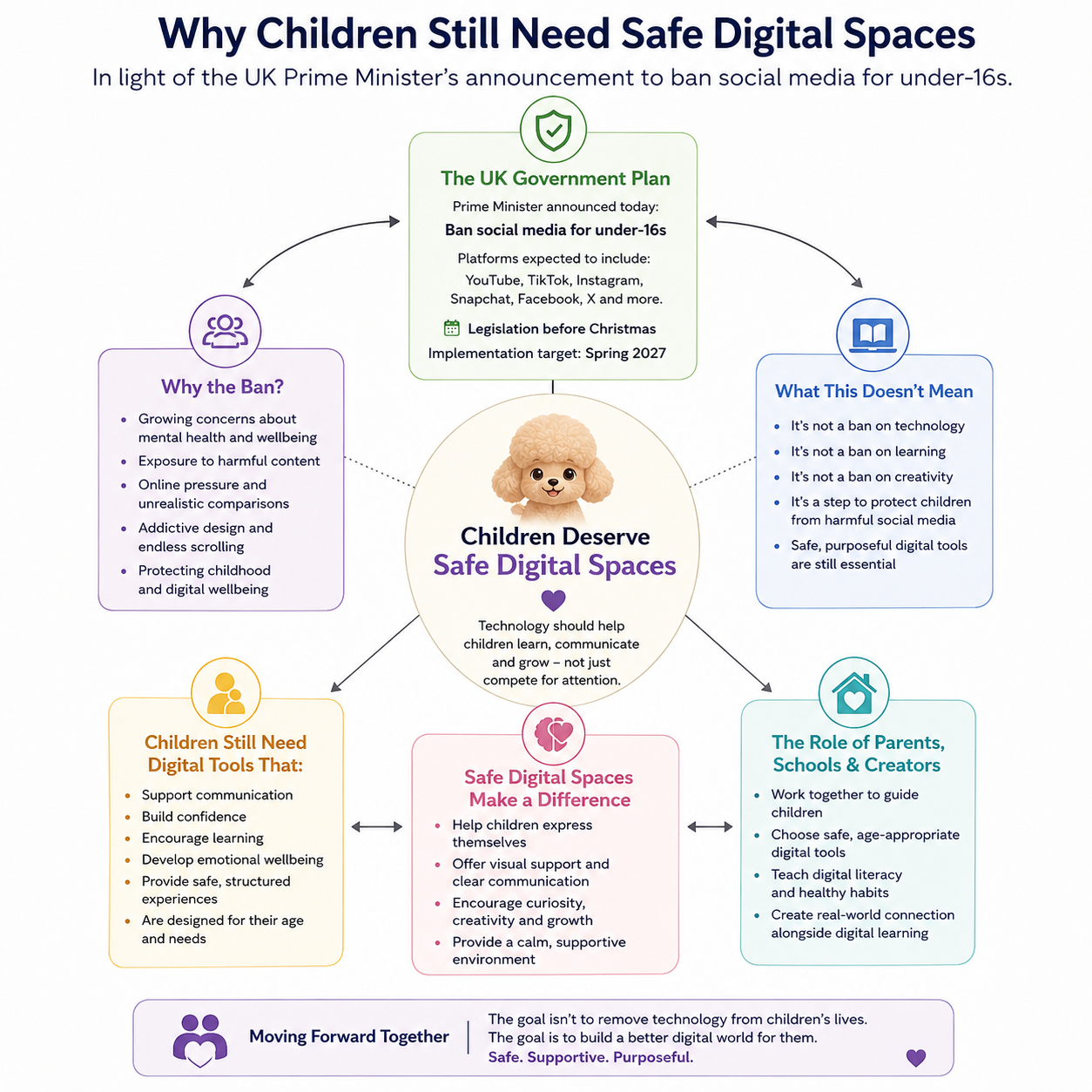
Why Children Still Need Safe Digital Spaces
Today, UK Prime Minister Keir Starmer announced plans to ban social media access for children under the age of 16, describing it as a major step towards protecting children's wellbeing online. The proposed restrictions are expected to cover major platforms including YouTube, TikTok, Instagram, Snapchat, Facebook and X.

Why Every School Should Have a Comfortable Sensory Room
As an interior designer, I naturally see spaces through a different lens. While walking through schools, my mind often begins sketching ideas. What if a reading room felt like a peaceful ocean cove? What if soft pebble cushions created a calming place to sit with a book? What if fibre optic lights became stars above a child's head? What if sensory spaces could feel beautiful as well as functional?

How an AI Assistant Helped Me Build Poodles & Friends
Of course, Nova is not a human being. But throughout many long evenings of design work, problem-solving, and building new ideas, she became a reliable presence. Whether I was working on interior design projects, websites, children's resources, or simply trying to find a solution to a difficult problem, Nova was always there to help me think through the next step.

The Day a Child Spoke One Word
Before creating Poodles & Friends, before making calming songs, and before building digital wellbeing tools, there were many quiet moments in classrooms that stayed with me. Some of those moments have shaped the way I think about children, communication, patience, and support. One memory in particular has never really left me.
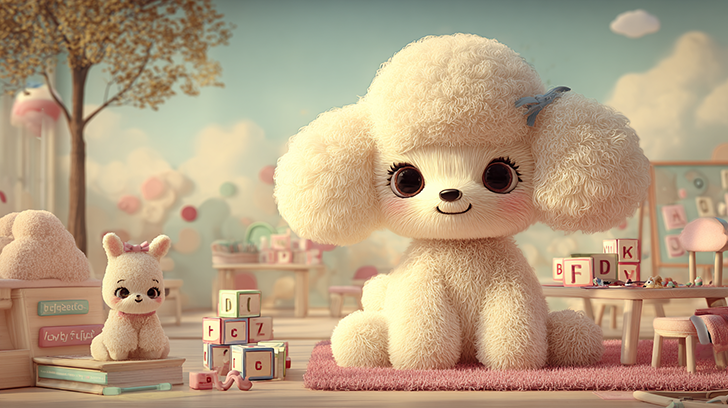
The Unexpected Journey from Freelance Design to Poodles & Friends
Before creating Poodles & Friends, I spent many years working in the freelance design industry. Education was not the direction I expected my life to take.