
School Inclusion Rooms Have Changed. But Have Their Interiors?
Working as both a designer and a Teaching Assistant has given me an unusual perspective. Over the past few years, I have worked in a variety of schools, spending time alongside students in classrooms, intervention spaces and inclusion rooms. Rather than visiting for a short meeting, I have experienced these environments throughout the school day, observing how they are used and how young people respond to them.
One observation has stayed with me. Although the purpose of school inclusion rooms has evolved significantly, many of the interiors have changed very little. Today, inclusion rooms are used for far more than behaviour management. They provide spaces for emotional regulation, pastoral support, one-to-one mentoring, independent learning and helping students successfully return to the classroom. Their role within education has become increasingly important.
Yet in many schools, these spaces are still converted classrooms. They often retain the same furniture, lighting, finishes and atmosphere as a standard teaching room. While practical, they rarely offer students a noticeably different environment.
As a designer, that immediately made me wonder:
If the purpose of the room is different, should the environment also be different?
Designing for Wellbeing
Good interior design is about more than appearance. It influences how people experience a space, how comfortable they feel and how willing they are to spend time there.
Educational environments are no exception. A thoughtfully designed inclusion room does not require expensive furniture or luxury finishes. Simple choices such as natural materials, calming colour palettes, comfortable seating, layered lighting and flexible layouts can create spaces that feel less institutional and more welcoming. The goal is not to make schools feel like hotels or homes, but to create environments that help students feel calm, respected and ready to learn.
Learning From Other Sectors
Hospitality, workplace and healthcare design have evolved considerably over the past decade, placing greater emphasis on wellbeing alongside function. Education is beginning the same journey. As schools continue investing in inclusion and student wellbeing, there is an opportunity to rethink not only how these rooms operate, but also how they are designed. Thoughtful design cannot replace the dedication of teachers and support staff, but it can help create environments that support the important work they do every day.
Looking Ahead
Working in schools has changed the way I think about design. As an independent designer, I often ask myself where I can make the greatest difference. Should I spend more time creating new concepts in the studio, or should I continue visiting schools, listening to teachers, support staff and students to better understand their everyday experiences?
I believe the answer is both. If we want to create the next generation of inclusion and wellbeing environments, designers need to work more closely with schools, local authorities, academy trusts, SEND professionals and independent children's care providers. By listening first, we can develop proposals that respond to genuine educational needs rather than assumptions.
Perhaps it is time to think differently about school inclusion rooms—not simply as alternative classrooms, but as carefully designed environments that support learning, emotional wellbeing and a genuine sense of belonging.
The best design rarely begins at the drawing board. It begins by understanding people.
— L C
Creator of Poodles & Friends
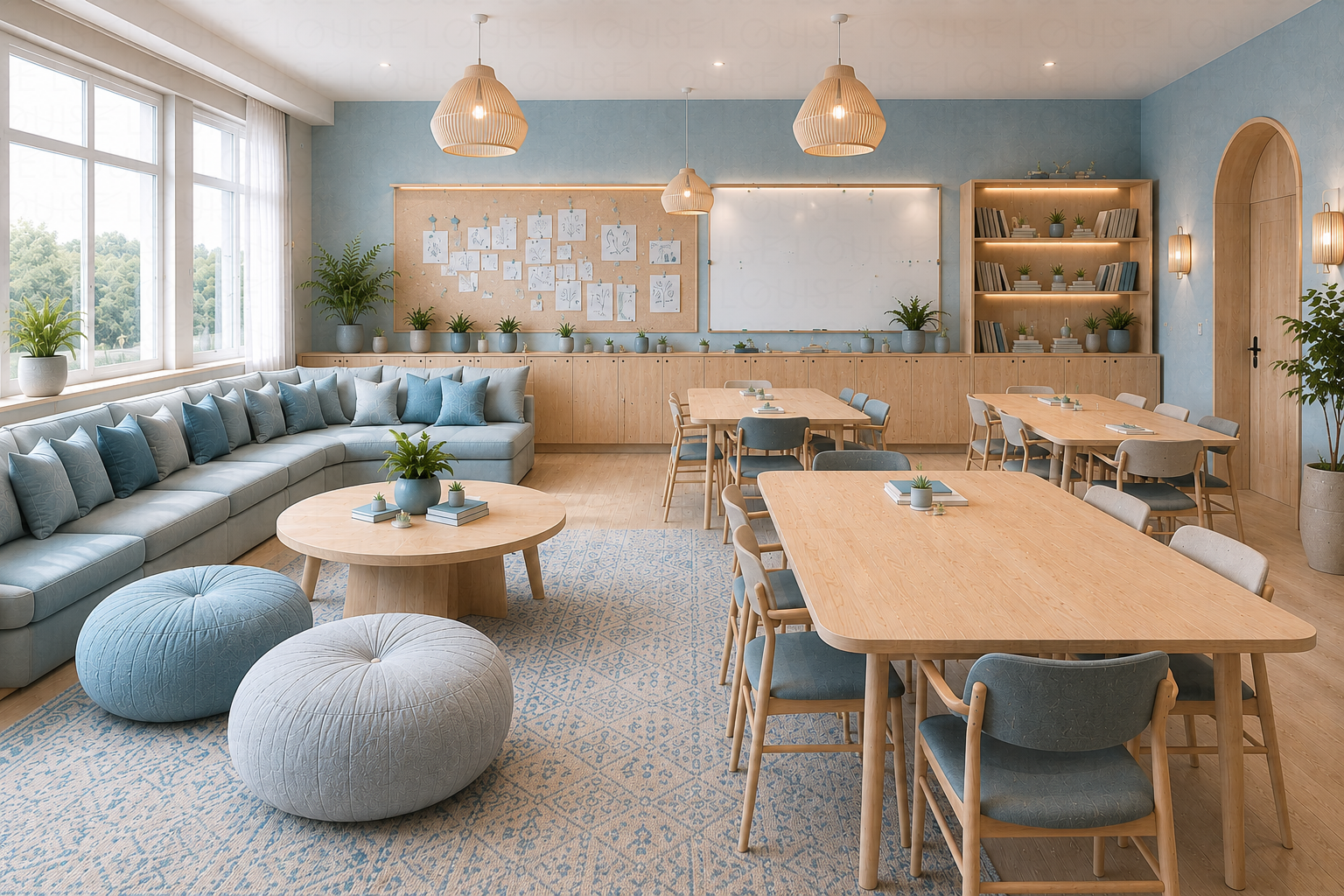
Concept visualisations exploring contemporary school inclusion and wellbeing spaces for secondary schools, colleges, educational settings and SEND environments. Inspired by my first-hand experiences working in schools and my passion for creating calm, welcoming environments that support learning, emotional wellbeing and positive student experiences.
Further concept designs and educational environment explorations will be shared here:
